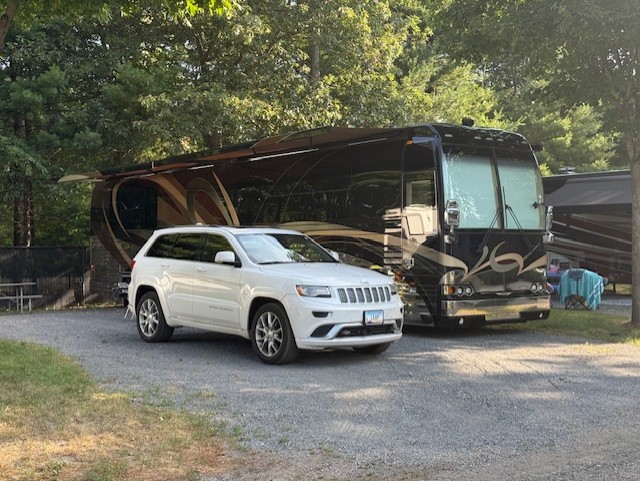
It’s challenging to find campgrounds (especially ones that can fit a 45′ bus) near big cities. The closest campground we could find near Boston was a nice, family-owned campground about a half-hour’s drive away.
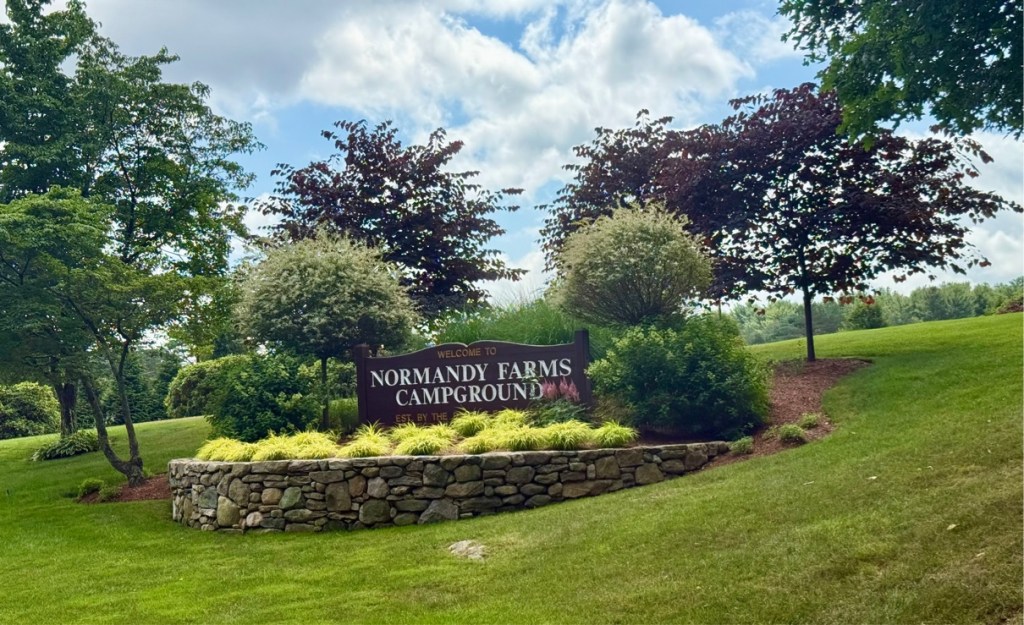
Normandy Farms Campground was a magical place! What a find! It was clean, the grounds featured fresh plantings, and best of all, the people – our fellow campers – were fun to be around.
Normandy is great for families with children; it has a petting zoo, several pools, playgrounds, and a fishing pond. Kids run and bicycle freely throughout the park. The security is tight to get into the campground and many of the families know each other as summer regulars at Normandy.
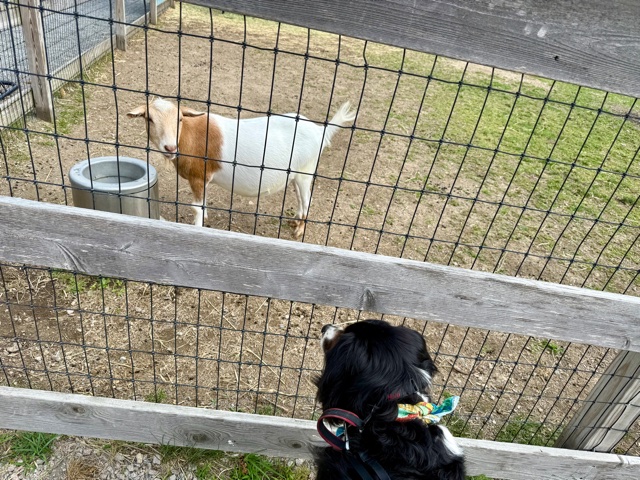
Ziggy and one of the resident goats locked eyes. Ziggy quickly backed away but kept a wary eye on The Kid.
Knowing how much we enjoy the company of people from Ireland, the universe made sure we had two delightful families from Ireland on either side of us.
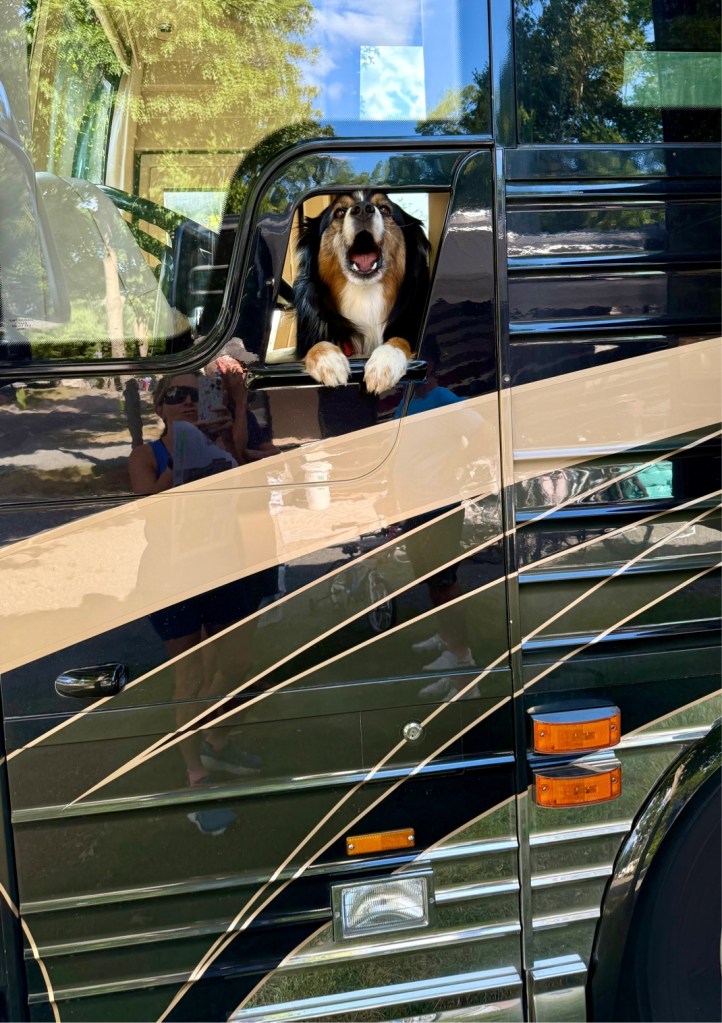
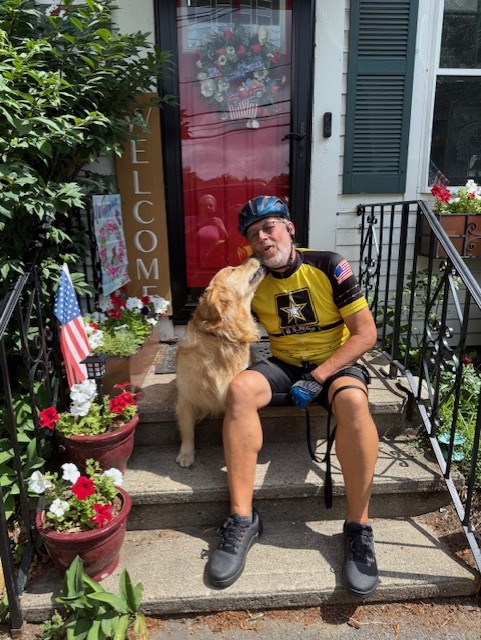
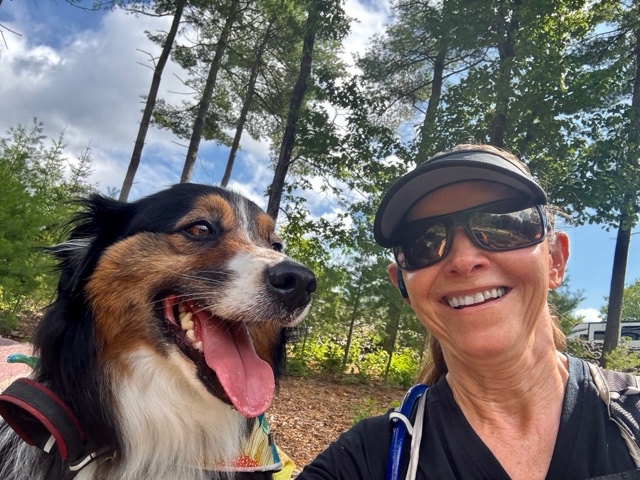
Ziggy said hello to our friendly neighbors: the McAree’s!
How’s this for kismet? The family staying in our exact campsite before we arrived was also from Arizona! The universe works in strange ways …or someone in the Normandy reservations office has a lot of time on their hands 😉
Our campsite backed to woods, which was nice.
Normandy had a couple of quiet attractions for a couple of adults too….
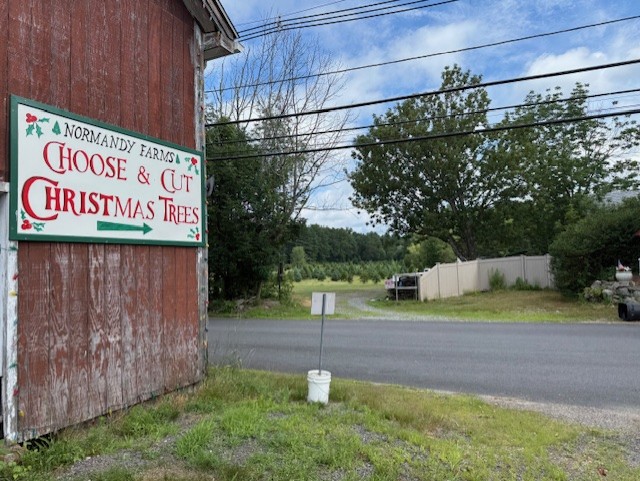
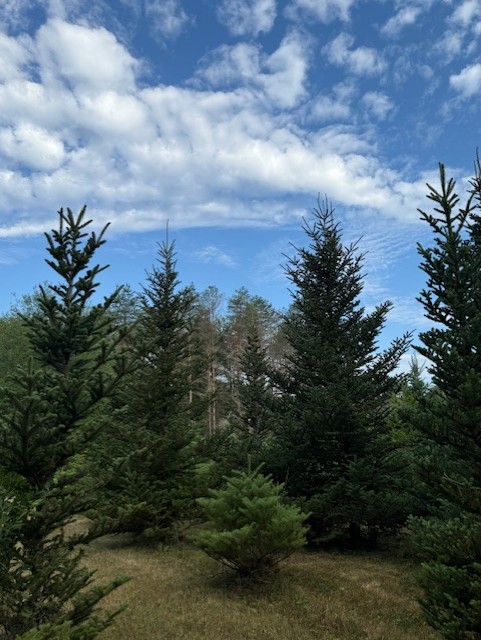
Normandy Farms was founded by the Daniels family in 1759. They opened their highly successful campground in 1971. Another part of the farm became a Christmas Tree Farm. And a young man from Minnesota via Arizona was instantly enchanted…
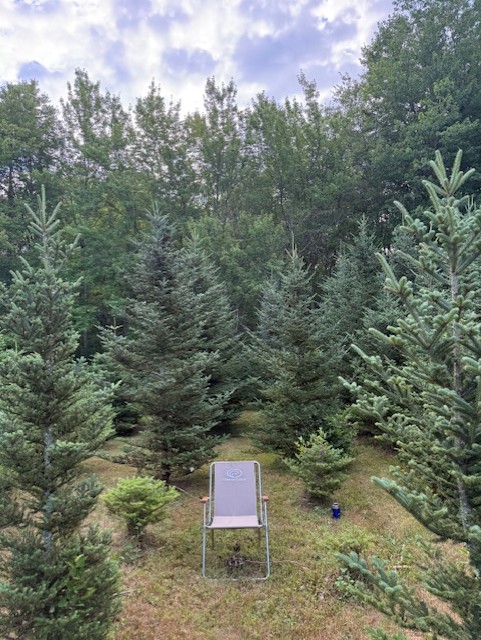
Whenever Jay sees Christmas trees, he melts into a puddle of sentimentality. When he saw the Christmas Tree Farm, he introduced himself to the folks running the Farm and they invited him to set up his chair and stay awhile.As a young man, Jay worked for a Christmas Tree Farm. He delivered truckloads of Christmas trees around southern Minnesota. He loves the smell of pine trees and the beauty of their form. Jay made a new friend at the Christmas Tree Farm 🙂
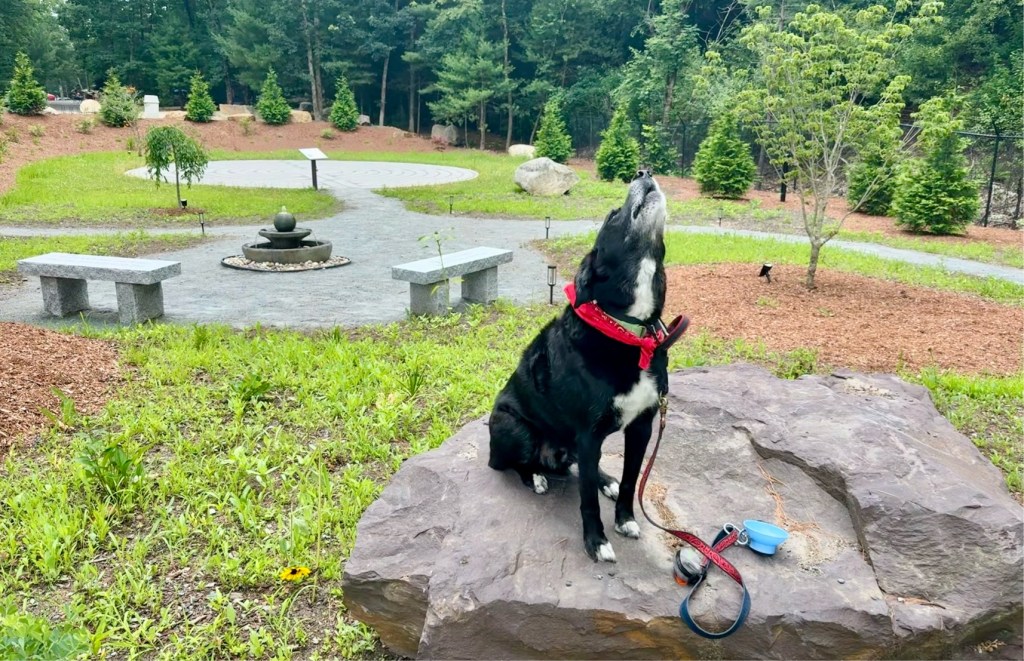
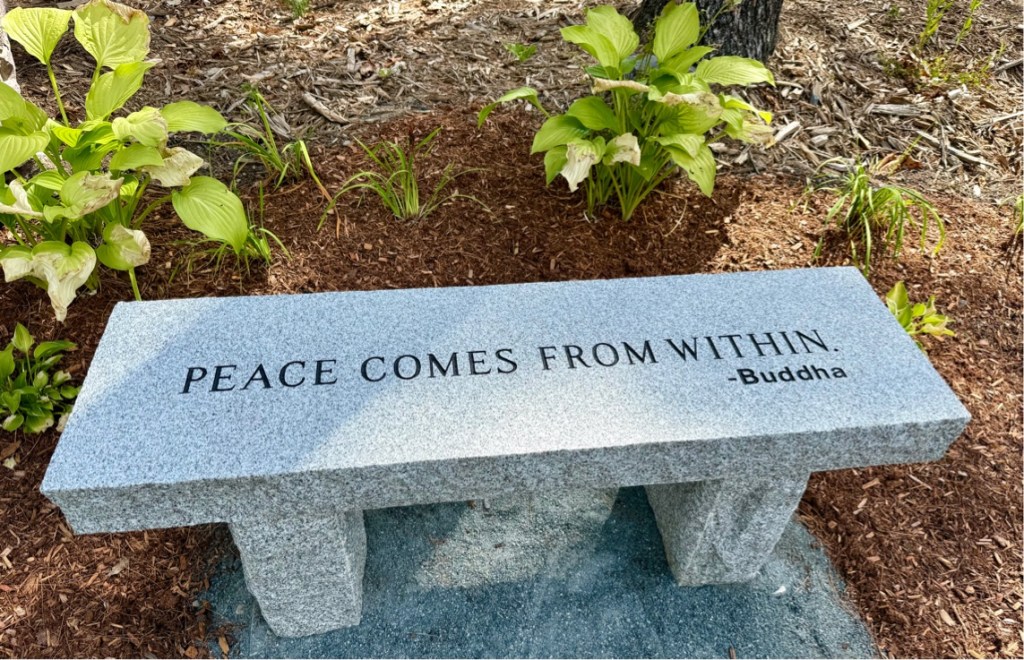
While Jay journaled under a canopy of pines, the boyz and I found our own little slice of heaven at the campground’s meditation park 🙂
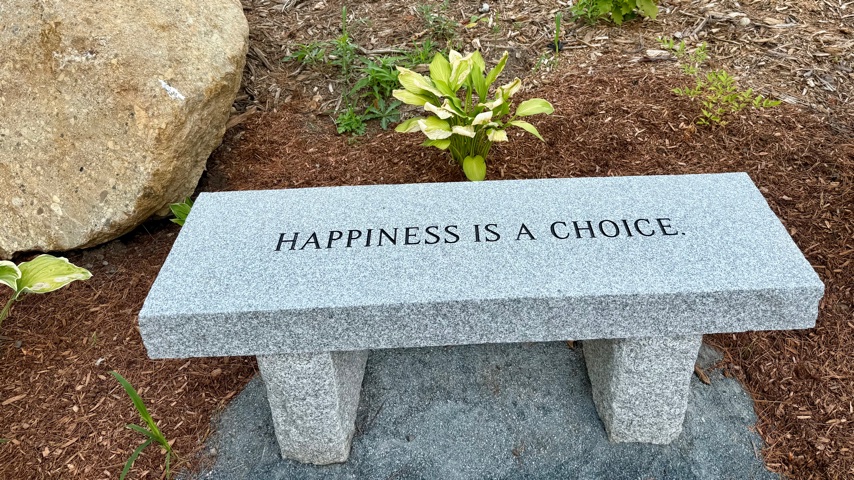
Austin broke out in song in the meditation garden.Happiness is indeed a choice. Ziggy and I chose to be happy in the meditation garden after our morning walk.
Now that you have a good feel for Normandy Farms, let’s go to the city of Boston!
We noticed a plethora of Dunkin’ Donuts throughout New England, especially in Massachusetts. It seemed there was a Dunkin’ at every rest stop, on nearly every corner in every town. We learned Quincy, Massachusetts (which is part of metro Boston) is the 1950 birthplace of these confectionary delights. My favorite Dunkin’ flavor: Boston Creme of course!
We loaded our bicycles onto Leap and drove into Boston. As cyclists accustomed to city biking, we figured we could cover more ground on two wheels than on two legs and we could also slide through traffic.
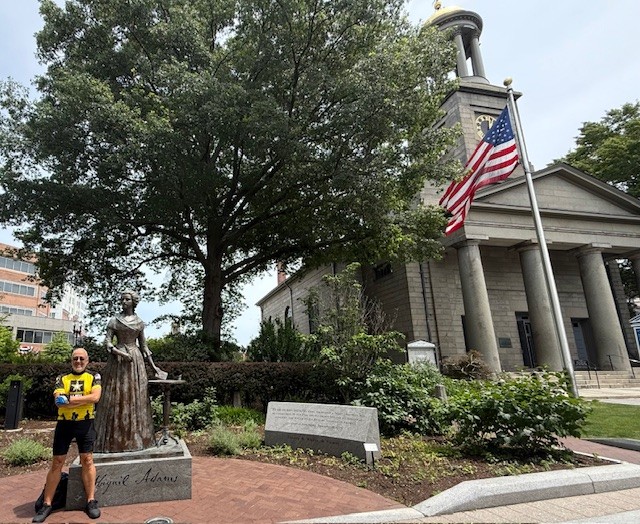
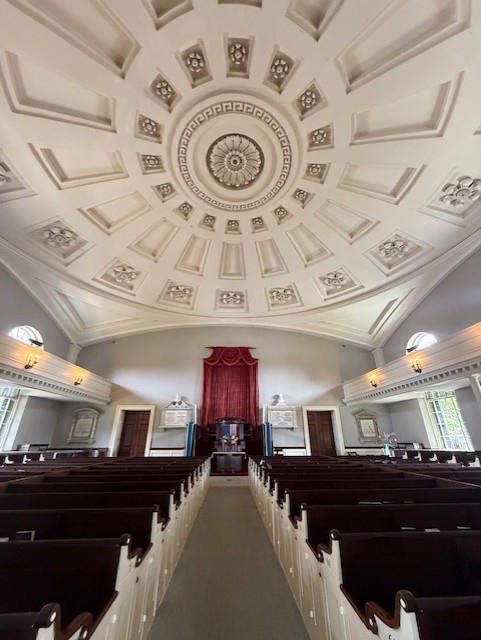
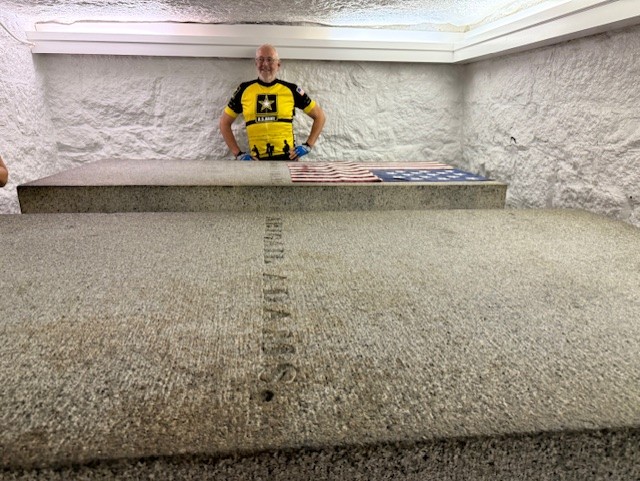
Jay is a big fan of John Adams. We had agreed we would dedicate a good chunk of our time in Boston to historical places related to John Adams. Here, Jay is standing next to a statue of John’s wife Abagail. John and Abagail sent each other mountains of correspondence throughout their marriage. Their marriage was one of deep love, respect, and equal partnership. The building beside Abagail is the church the Adams helped build for their community in 1828.We toured the church John and Abagail helped finance by donating land for the church to be built upon. Granite for the church came from Adams’ quarry. The domed ceiling features a passionflower (to symbolize the passion of Jesus) surrounded by lotuses (symbolic of purity).The church is known as The Church of the Presidents. In the basement are the final resting places of John, Abagail, their son John Quincy Adams (the sixth President of the United States) and his wife Louisa. The National Cathedral in Washington, DC is the only other church in our country to house a presidential tomb (Woodrow Wilson).
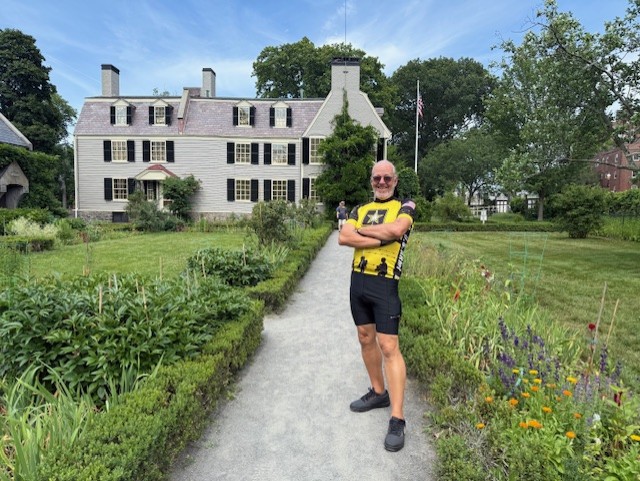
We rode our bikes down to Quincy. We didn’t find the birthplace of Dunkin’ Donuts butt we did find the birthplace of America’s second President, John Adams. We toured both the home in which John Adams was born and also the home John and Abagail Adams purchased shortly before he became Vice President.
In 1788, they bought the home sight unseen while John was a diplomat in London. They named their new home Peacefield.
Abagail was not particularly overjoyed with their new home. She had grown accustomed to living in nice mansions in London and Paris during John’s diplomatic tours. Peacefield was owned by a family loyal to the King of England who left their home to return to England during the Revolutionary War. When Abagail first saw the small, neglected home in 1788, she wrote that it reminded her of “barracks.” She spent years planting gardens and overseeing additions to the small house.
After eight years serving as Vice President under George Washington, John Adams was elected the second President of the United States and began his term in 1797.
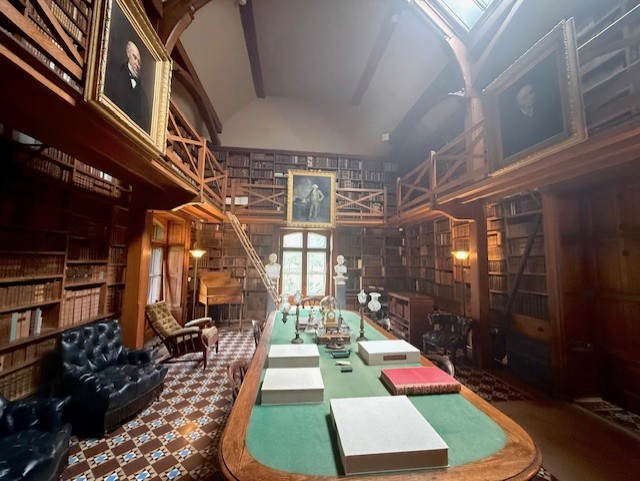
In 1870, John’s grandson Charles, built a stone library for his father, John Quincy, on the grounds of Peacefield. Contrary to what we might assume, neither John nor John Quincy had much wealth. Charles, however, married smartly and his new bride financed Charles’ vast additions and renovations to the family home at Peacefield. The library contains more than 12,000 books, including some from John Adams’ collection.
A few tidbits about John Adams
John Adams was a delegate to both the First and Second Continental Congresses. He successfully argued for George Washington to be commander-in-chief of the Continental Army and helped Thomas Jefferson draft the Declaration of Independence.
During the Revolutionary War, he diversified U.S. foreign relations, served in France and Holland in strategic diplomatic roles, and negotiated the Treaty of Paris which recognized the United States’ independence from Great Britain. As President, Adams established the U.S. Navy to protect America’s interests at sea.
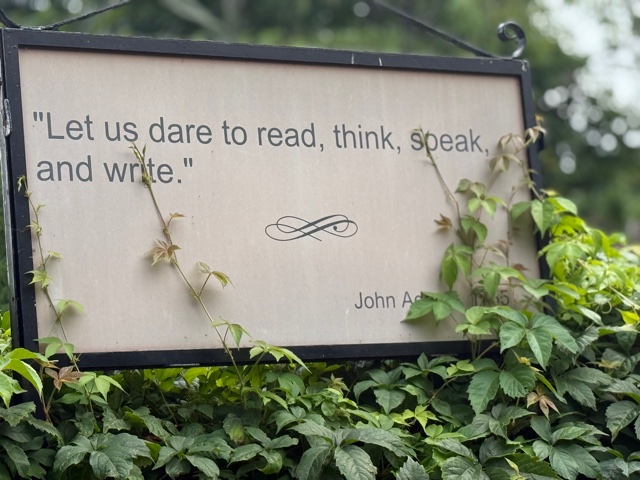
Both John and Abagail were prolific readers and writers.
We rode our bikes from Quincy back to downtown Boston and followed The Freedom Trail through town.
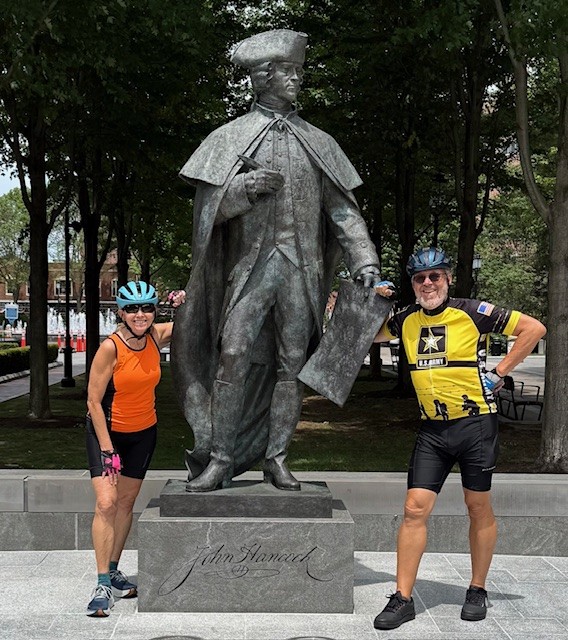
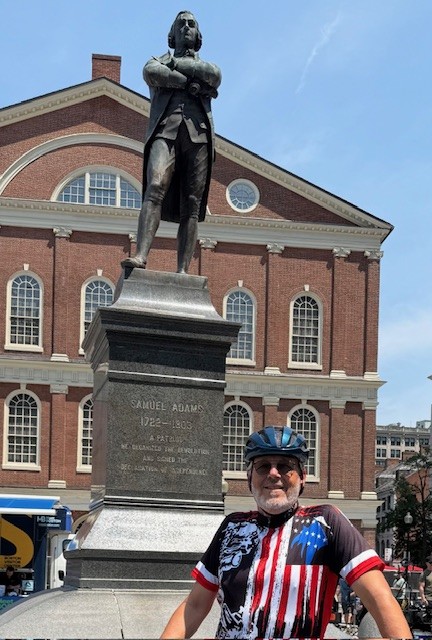
Jay took pictures of Paul Revere’s house. It remains as it was back in colonial times butt is now surrounded by tall complexes. Revere was a silversmith and made the first bell for the Adams’s church I mentioned earlier.Most of us know John Hancock as the largest signature on the Declaration of Independence. He was one of the richest men in the 13 colonies, a client of John Adams’ law firm, and he bankrolled a significant share of the Revolution.More than just a beer, Sam Adams was a colorful figure in the colonies. He was John Adams’s cousin and the two had frequent disagreements (many happened in Fanuel Hall, which is behind Sam’s statue) about the American Revolution. A skilled communicator, Sam was instrumental in rousing colonists’ anger about taxes, free trade, and other dastardly deeds of the British government. He was one of the instigators behind the Boston Tea Party.
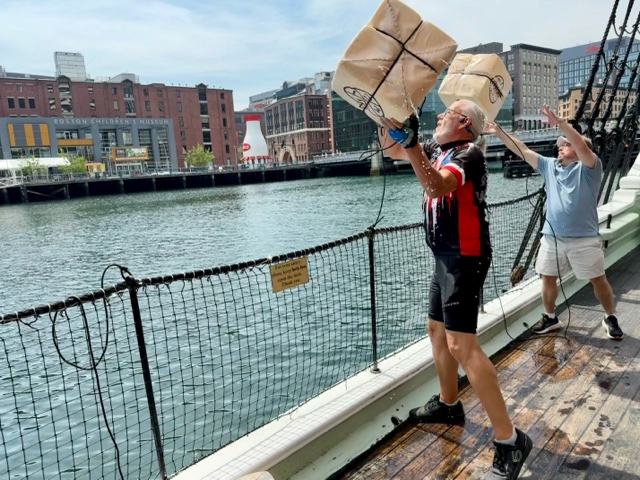
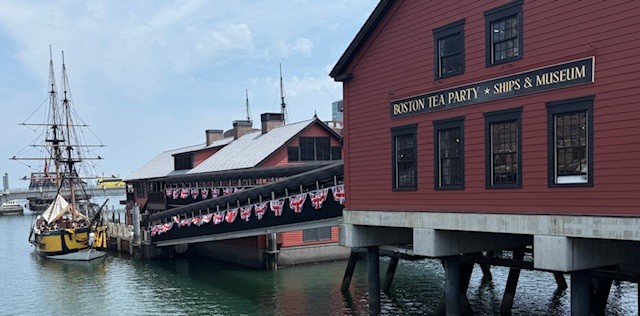
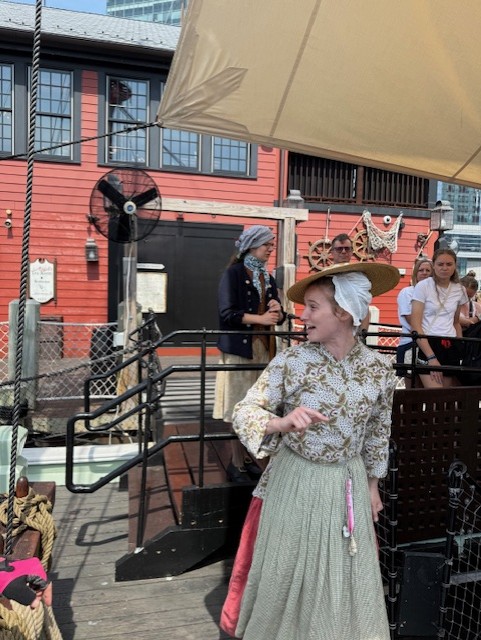
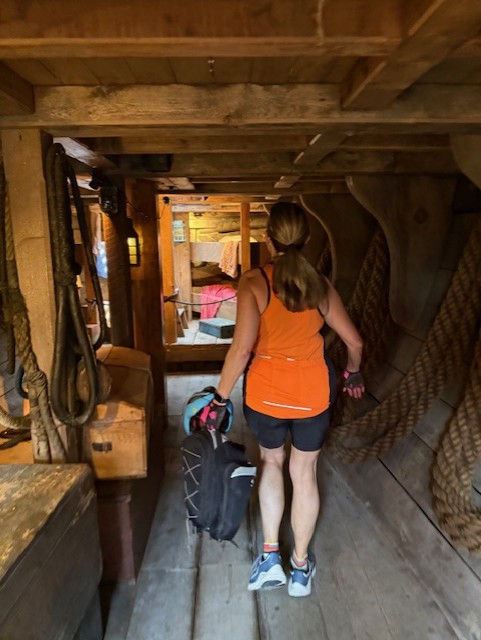
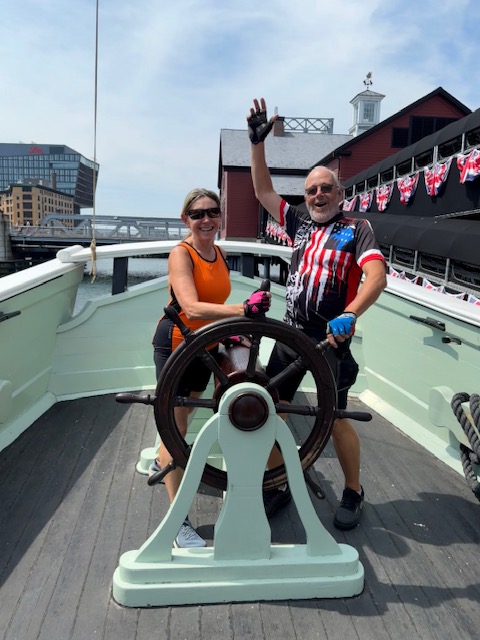
We topped off our Boston tour with a re-enactment of the Boston Tea Party. It sounded like a lot more fun than a museum…. and it was!
Our Boston Tea Party re=enactment took place on a wharf near where the actual Tea Party took place.On the night of December 16, 1772, about 60 colonists boarded the three tea-carrying ships docked at the harbor. Armed with axes and disguised as Mohawk Indians, the colonists boarded the ships. Thankfully, our re-enactment didn’t involve axes or mohawks.I doubt the actual Tea Party participants waved and smiled for the camera during their adventure. In fact, they were sworn to secrecy and never revealed who amongst them committed the tea spilling.The rebels dumped 342 chests of tea (92,000 pounds) into the harbor., destroying about $1.7M (in today’s dollars) of tea. Jay only threw one bundle of a floatation device covered in paper worth about $1. And then he pulled it back from the water so the next “rebel” could repeat the performance.
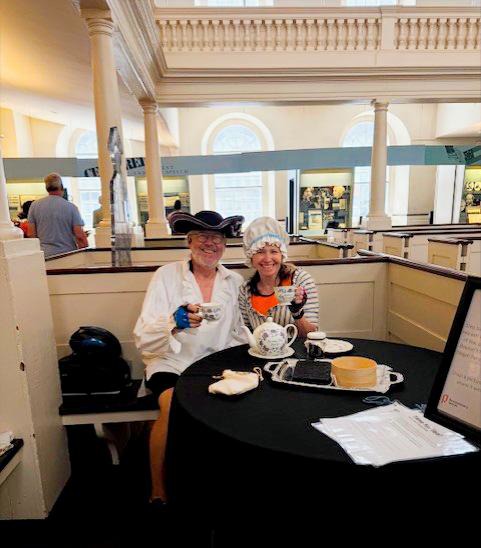
We were in full revolutionary mode after the raucous tea party, so we headed up the street to the famous meeting hall where the colonists gathered to discuss all the ways they were being picked on by the British government.
The old South Meeting House was the largest building in colonial Boston and was where colonists held rabble-rousing debates and planned the Boston Tea Party.
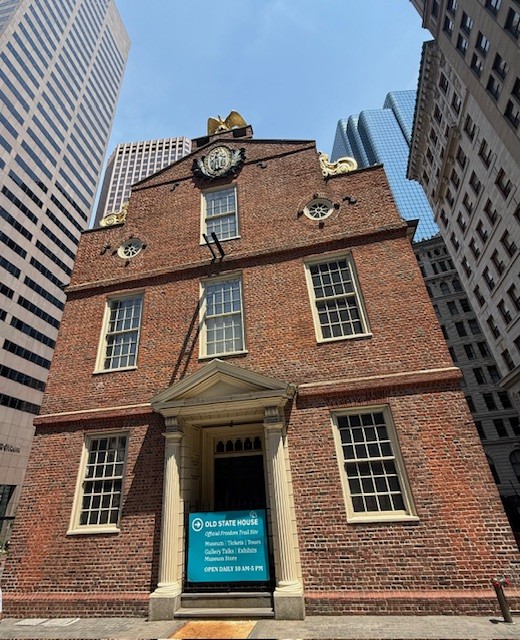
Our very last stop was the Old State House. Built in 1713, the Old State House was the first seat of colonial government.
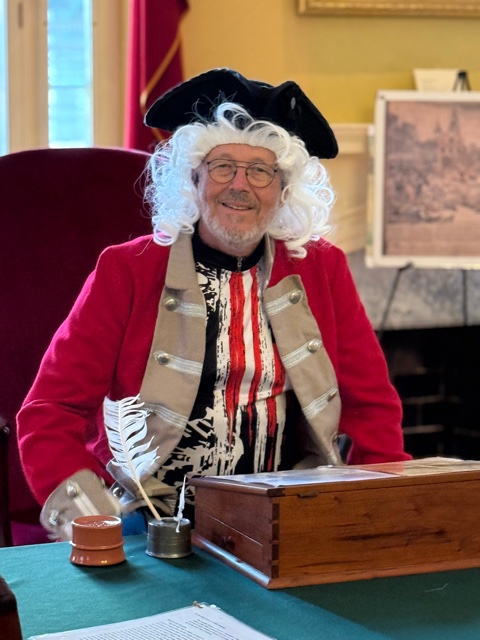
Colonial leaders stood on an upper balcony of the Old State House and read the Declaration of Independence aloud to crowds eager to hear about the philosophy and ideals of their new government.After reading the Declaration of Independence to his constituents, Jay Hillmer sat down and wrote the Constitution of the United States.
You both got into the spirit with the costumes. Thank you Linda for always giving us a bit of history on the places you visit. You are a wonderful writer, and I feel I am right there with you as you roam the States.
I share Jay’s admiration for John Adams after I read “For Those Who Love”. Of course, It was Jay’s recomendation. And, I have to say, Linda’s bonnet after the tea party is quite fetching.




 Tinkerbell's Travels
Leave a comment