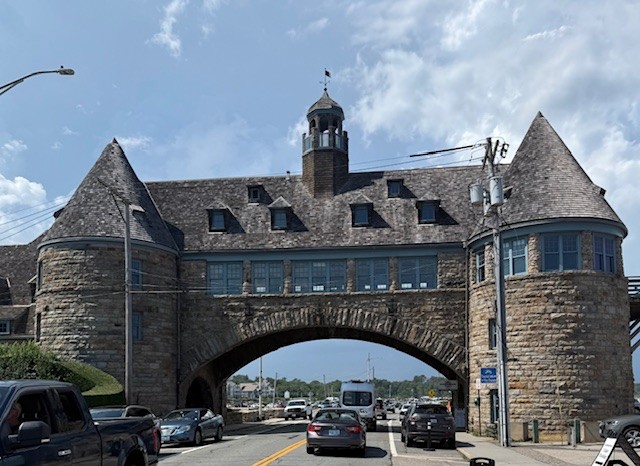
We had one day remaining at the Normandy Farms Campground and neither of us had ever seen the beaches of Rhode Island. On a whim (one of the perks of RV travel), we packed up Tinkerbell and drove an hour south to the closest beach, which is in the town of Narragansett.
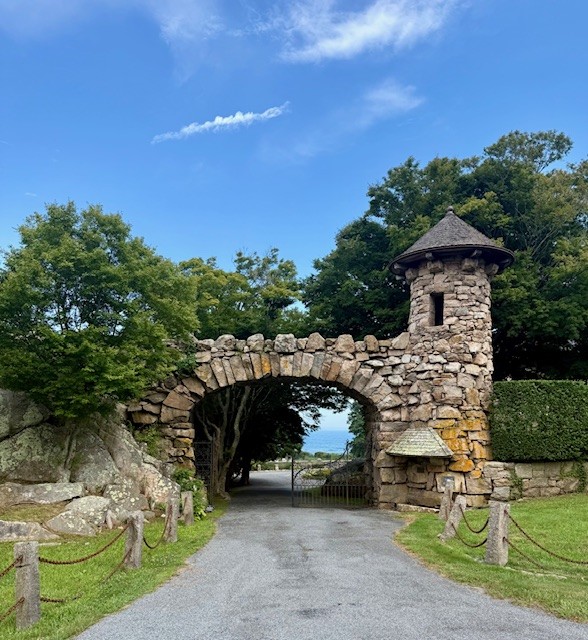
Before our visit, we didn’t know anything about Narragansett (I can still barely spell it). We were blown away by the entrance to the town.
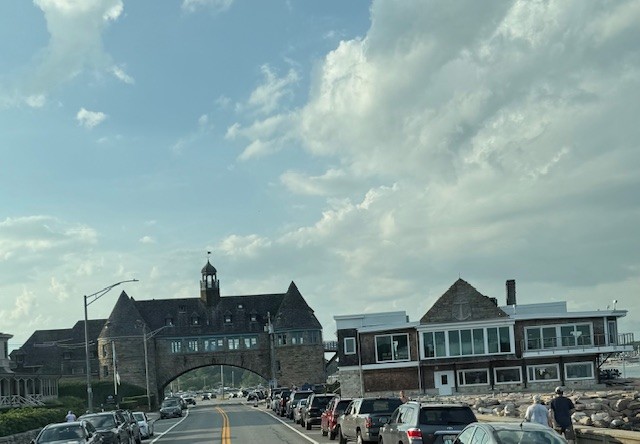
Our jaws dropped at the sight of the iconic Towers of Narragansett. We had no idea about the history of the place. We thought we had simply chosen a quaint quintessential New England beach town in which to spend our day.
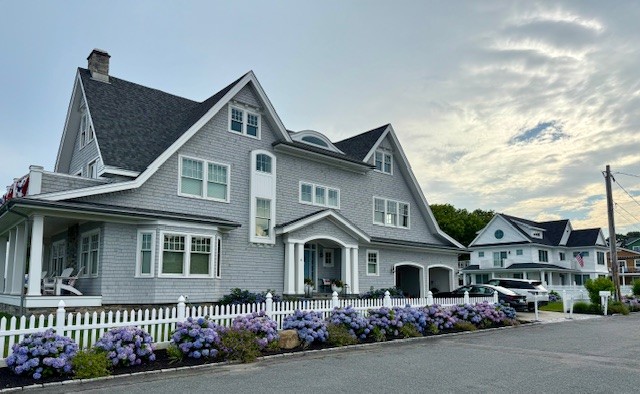
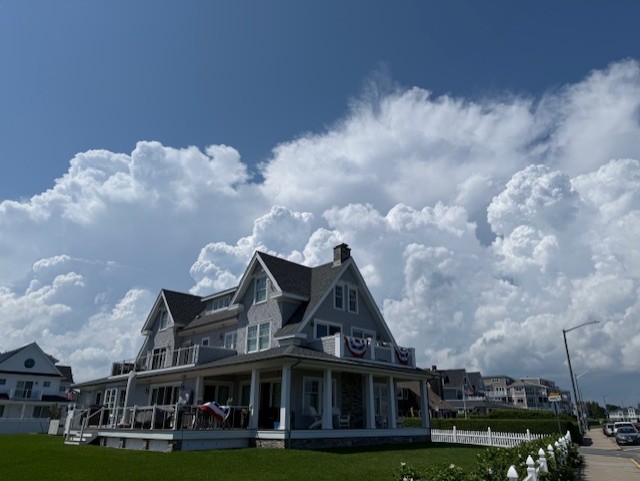
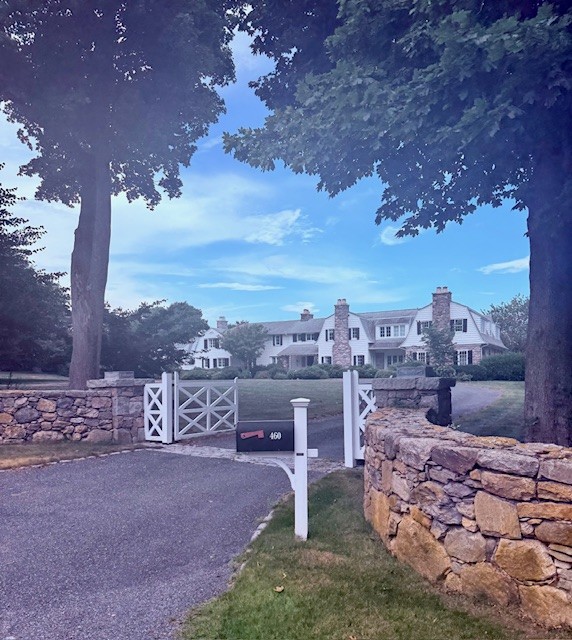
We had no idea we had stumbled into an enclave steeped in well-heeled history! We quickly surmised we were in a nice part of town when we saw the homes lining the ocean front streets and well-manicured lawns along the shoreline.
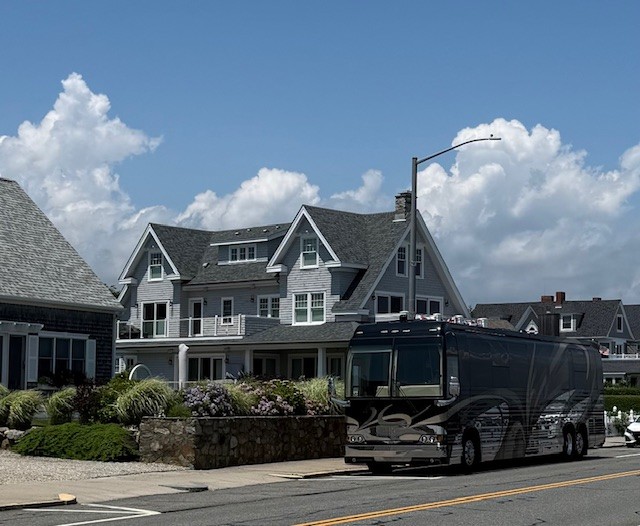
Tinkerbell felt right at home amongst the uber-wealthy! And so did the dogs, who enjoyed the lush grass and cool ocean breezes.
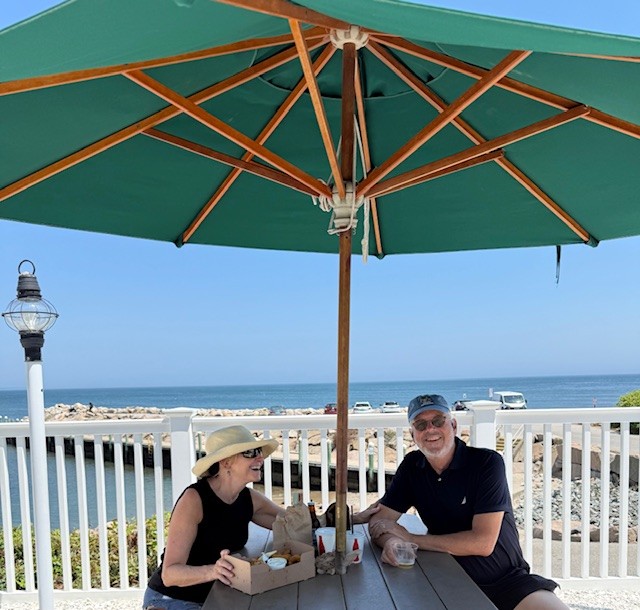
Through every inch of roadway along the New England coast, Jay Hillmer pined for a tasty clam cake. He had yet to find one that met the storied memories of his times driving the Fife and Drum Corps to New England events.
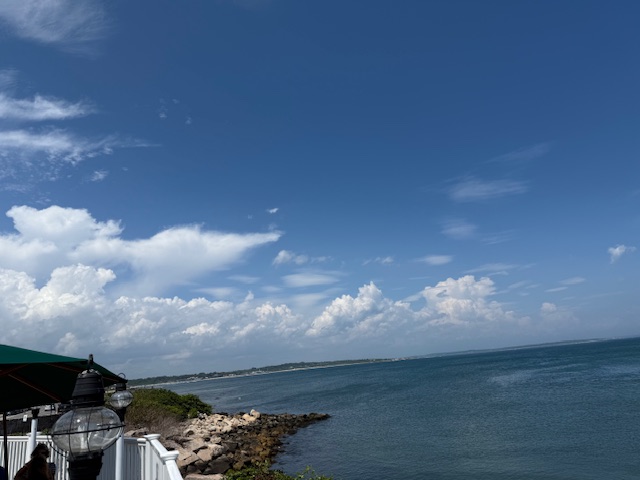
We took a relaxing stroll along the beach back to Tinkerbell.
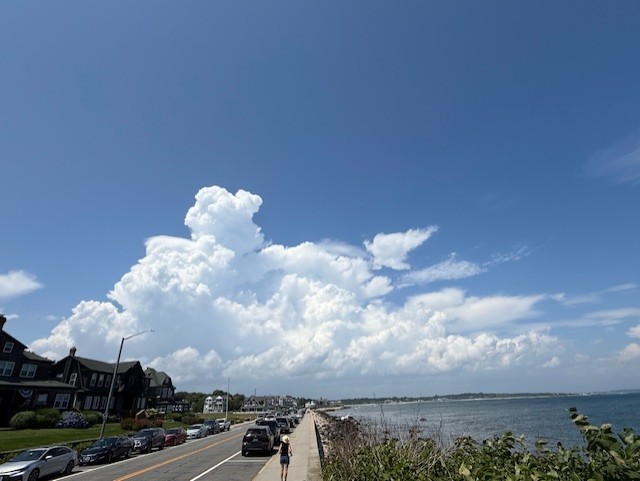
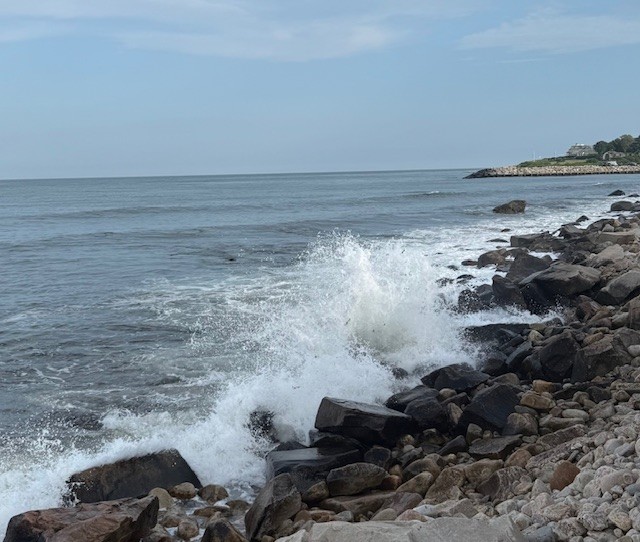
We changed into our bike attire and hit the road leading to a lighthouse I found on the map: Judith Point.
We took a back road to ensure we hugged the shoreline as much as possible and would hopefully treat us to some juicy eye candy.
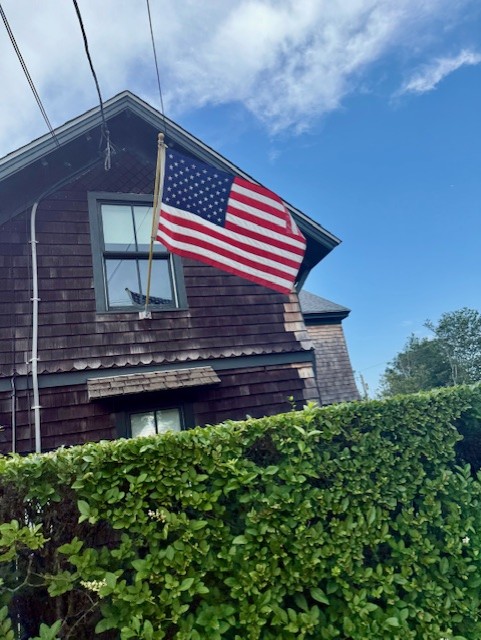
We were not disappointed. We started off seeing some smaller, cedar-sided houses that looked exactly like what you’d see in a seaside New England town.
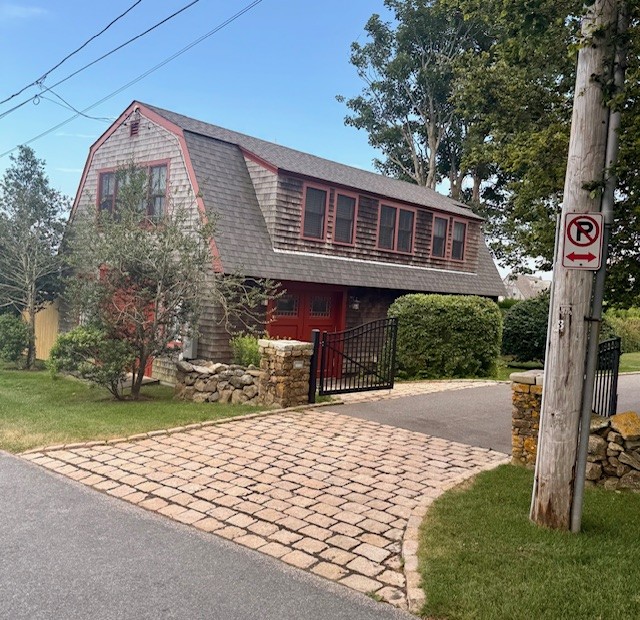
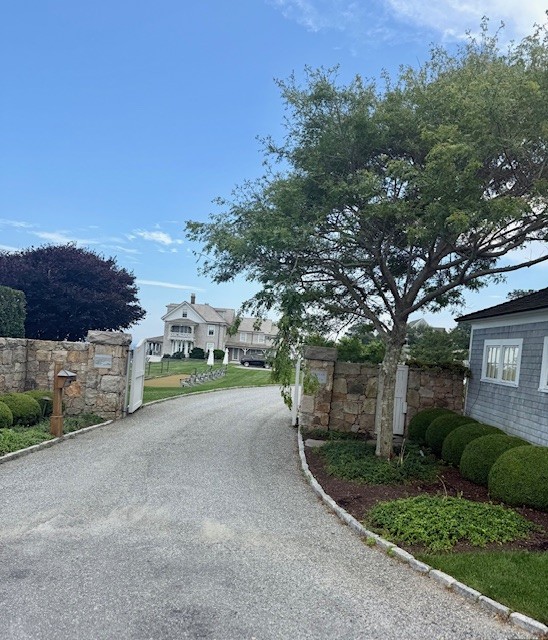
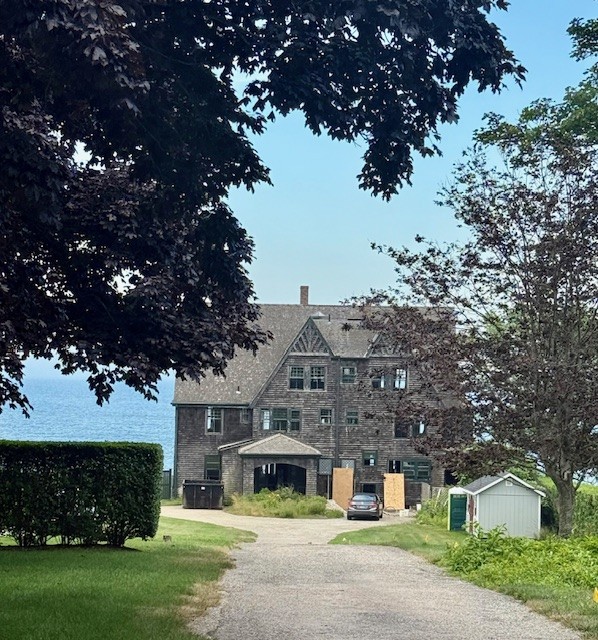
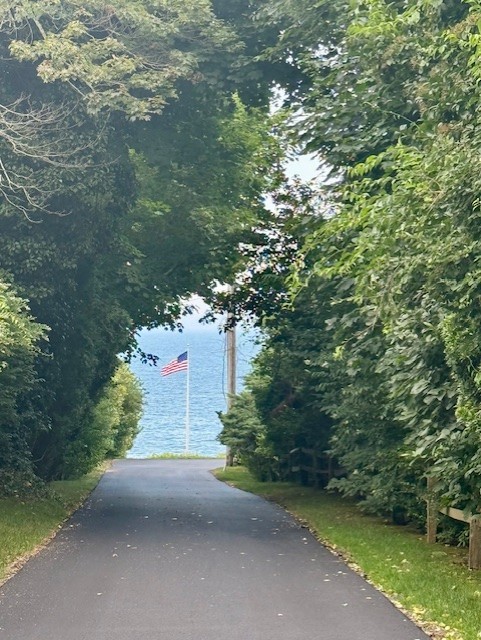
What we didn’t know was the history of Narragansett. If we did, we wouldn’t have been so surprised by the miles and miles of seaside mansions that entertained us as we rode the bicycle-friendly road to Point Judith.
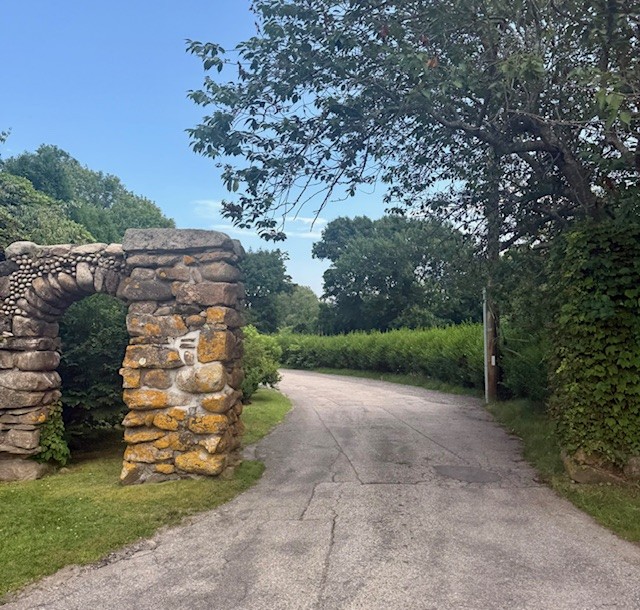
Narragansett is named after the Narragansett Indian tribe that inhabited the lands before English investors purchased the land from the Native Americans in 1658. The lands were mostly used for farming, fishing, and livestock grazing.
During the 1600-1700s, the town built mills and a pier to meet the growing demand for its cheese, grain, sheep, cloth, and horses.
And then, in 1848, the quiet town of Narragansett got hit by a stroke of serendipity that would forever change the rural enclave.
In 1848, John Dulles (the great grandfather of John Foster Dulles, who served as Secretary of State under President Eisenhower and for whom Washington’s Dulles Airport is named) paid a visit to the mills in Narragansett. Dulles was in the business of brokering cotton, and he sold cotton to – and bought a lot of cloth from – New England textile mills.
Dulles fell in love with Narragansett. So in love that he booked all the rooms at a local boarding house in Narragansett for the entire summer.
He and his friends and family began an annual summer vacation in Narragansett, prompting the locals to build the town’s first hotel in 1856. The luxury hotel catered to Dulles and his growing circle of wealthy friends from Philadelphia and New York.
Soon, Narragansett became THE place for east coast wealthy families to spend their summers. Considering the limitations of travel options in those days, most people stayed the entire summer rather than spend weeks traveling back and forth (via stagecoach) to their homes.
After the Civil War, the railroad was built through Narragansett and tourism exploded (as did textile shipments and other trade) with visitors coming from as far away as Missouri. Hotels sprouted up like weeds to meet the increasing demand for high-dollar, luxury vacation suites.
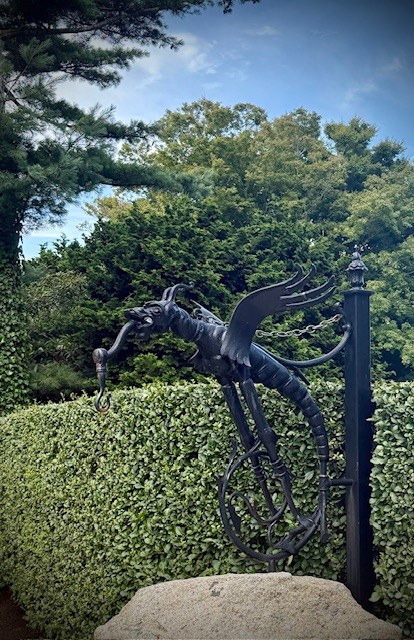
Soon, money-laden visitors said to their realtors, “Why do I need to stay in a hotel? I’ll just build my own castle that’s as big as a hotel!” And with that, the building boom of well-appointed mansions and fearsome gated entries began.
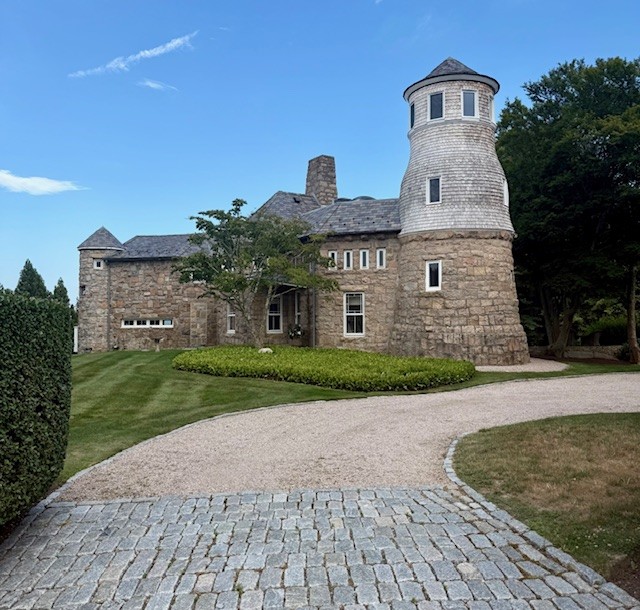
All the rich visitors locked away in their private castles craved a place to meet, socialize, and play tennis.
Behold! The Narragansett Pier Casino (remember those Towers you saw at the top of this post?) was born. Everyone who was Anyone made sure they were seen at the Casino.
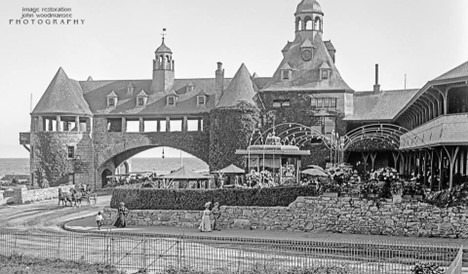
The wealthy clientele built golf courses, tennis courts, and polo grounds to host international tournaments. They stayed for the season, not just for the day, and fueled Narragansett’s economy.
What Narragansett calls its “darkest day” occurred on September 12, 1900. On that day, fire destroyed the Casino, burning the entire structure leaving only the stone towers as reminders of the once-magnificent playground of the beach town’s vacationers.
Narragansett evolved from a luxury vacation spot to a commercial and recreational fishing town.

The first lighthouse on Point Judith was a 35-foot-tall structure built in 1810. A hurricane knocked it out just five years after it was built.
The current lighthouse, which is still operating (fully automated), was constructed in 1857 and stands 51 feet tall.
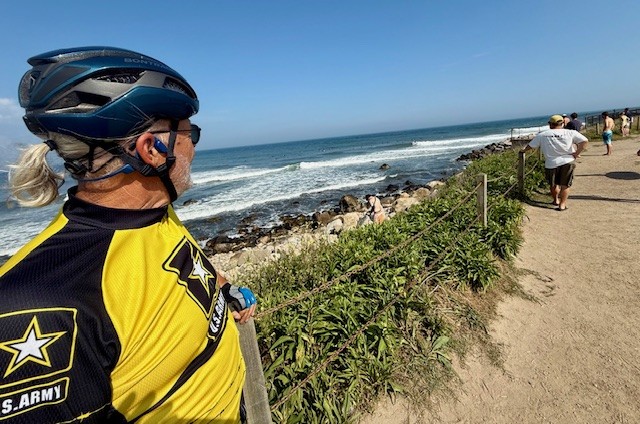

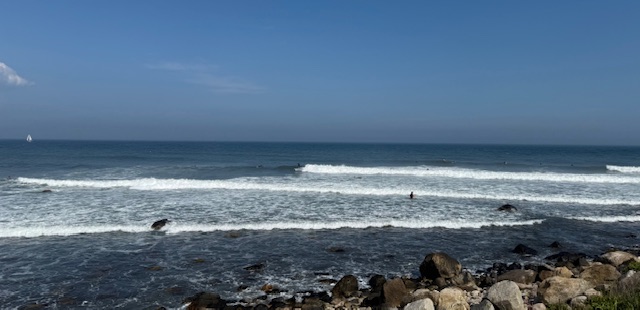
We returned from our informative bike ride to find two dogs waiting anxiously for our return. They were feigning a peaceful sleep.
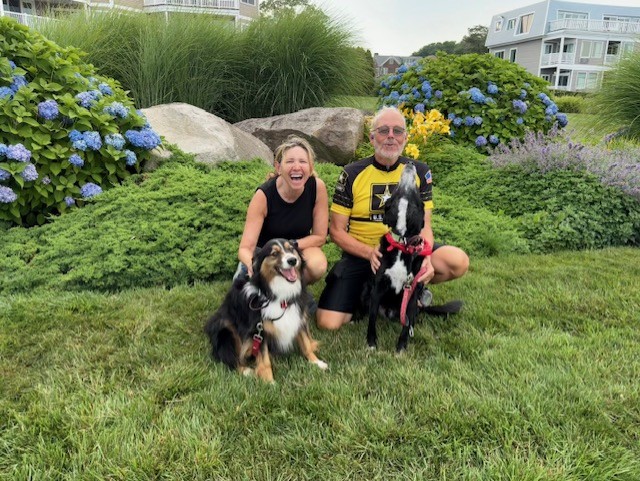
After a good night’s rest at Normandy Farms, we drove seven hours through Massachusetts, New Hampshire and into Maine, stopping at the small border town of Houlton.
Even though we could have driven another hour or so, we decided it was better to get some sleep to prepare us for the possibly cantankerous border crossing into Canada. Crossing the border is not a big deal in a car. Butt, when you’re crossing in what is essentially your home, loaded with fruits and vegetables, a bit of liquor, and three pets, crossing the border can go smoothly or it can turn into a day-long nightmare.
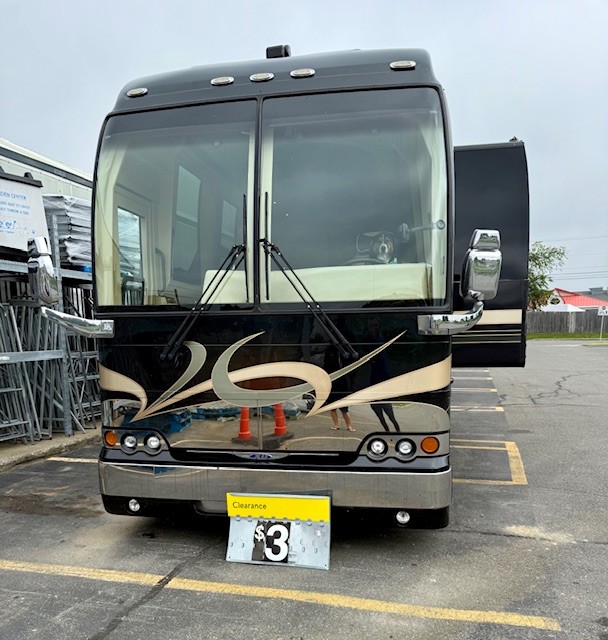
We decided we’d tackle the border in the morning after a quiet night’s sleep in the Walmart parking lot.
Up Next: Oh Canada!
Commenting Conundrums
Thank you to everyone who is taking time to share comments – it means a lot to us to hear from you!
Some readers have said they tried to leave a comment but ran into issues.
Leaving a comment requires you have to create a free account with WordPress by providing your email address. Please give this a try and if you still have issues, let me know 🙂
If you are an active commenter, please share any tips you think might be helpful for people who are having problems posting comments – thank you 🙂


Leave a comment