My knowledge of Atlantic Canada, and Nova Scotia in particular, was pretty limited.
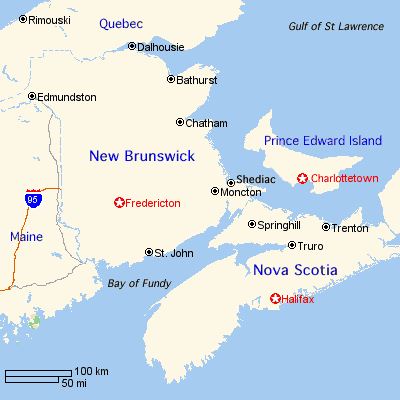
Prior to our Summer of 2025 Tour, when I heard the words “Nova Scotia,” I had only two thoughts:
First, I thought of a delicious breakfast: Nova Scotia lox, which is a smoked salmon, on fresh bagels with cream cheese, ripe tomato, onion, and capers.
Second, I thought of old screen heartthrob Warren Beatty who callously broke poor singer/songwriter Carly Simon’s heart when he flew his “Learjet up to Nova Scotia to see the total eclipse of the sun.” I think Carly Simon was yesterday’s Taylor Swift when it comes to writing songs about ex-lovers.
Since it was early afternoon, and we only had two nights in Nova Scotia, we hopped into Leap for a drive into Halifax.
When time is short and you want to get a quick lay of the land in a new city, a sightseeing city tour, like on one of the hop-on-hop-off buses, is an efficient solution.
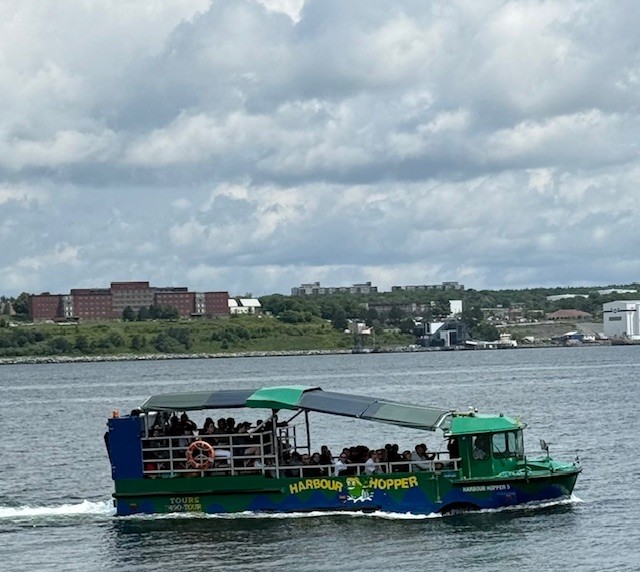
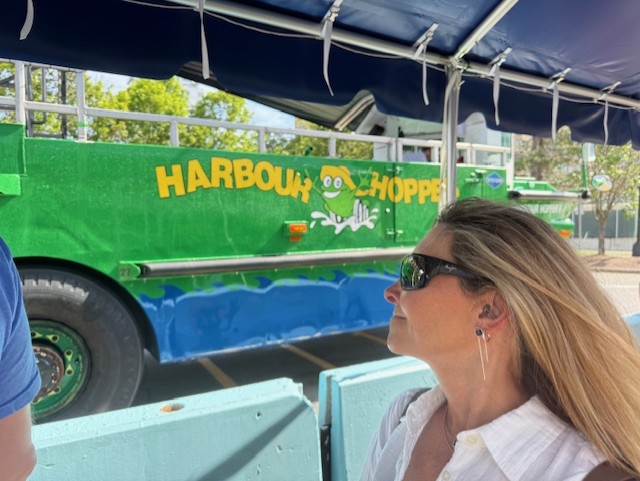
Usually, we choose land-based tour buses to get a quick feel for a city, butt the idea of seeing Halifax from both the land and the water intrigued us since Halifax is on the Atlantic Ocean.
A Short History of Halifax
In 1746, King George II ordered Edward Cornwallis, a career military officer, member of the aristocracy, and Governor of Nova Scotia, to establish Halifax as a new capitol in Nova Scotia.
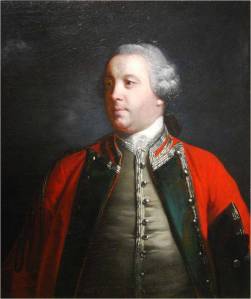
Cornwallis accomplished the mission and named the settlement after the 2nd Earl of Halifax, a British statesman who oversaw commerce in the Americas and was known as “the father of the colonies.”
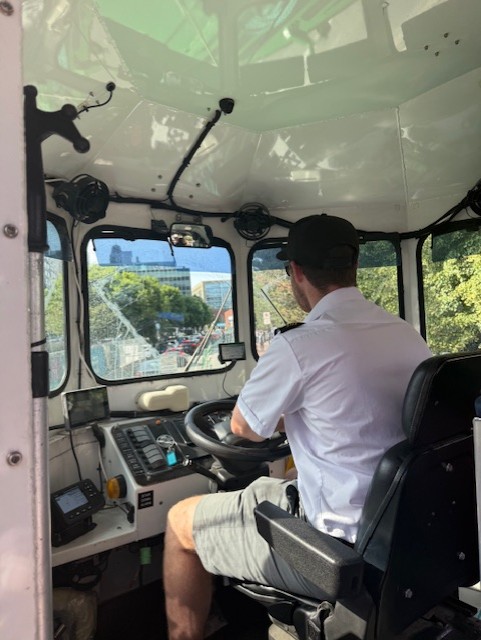
After sharing the history of Halifax, our duck captain drove us straight into the Atlantic Ocean.

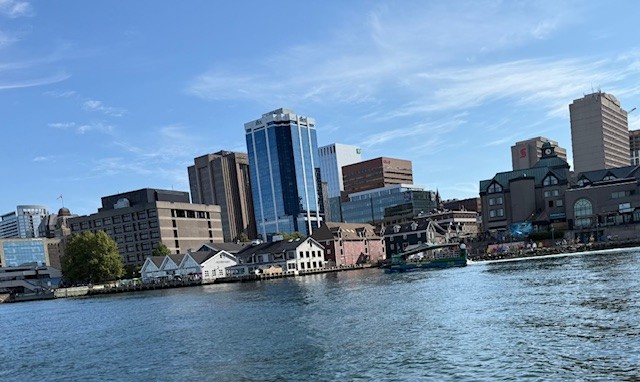

Following our duck tour, we ate at a local diner (tempting as it was, we did not have duck for dinner) and returned to Tink and the boys. For the first time in our travels, I suffered from food poisoning and had a long night praying to the porcelain god known as Tink’s toilet 😦
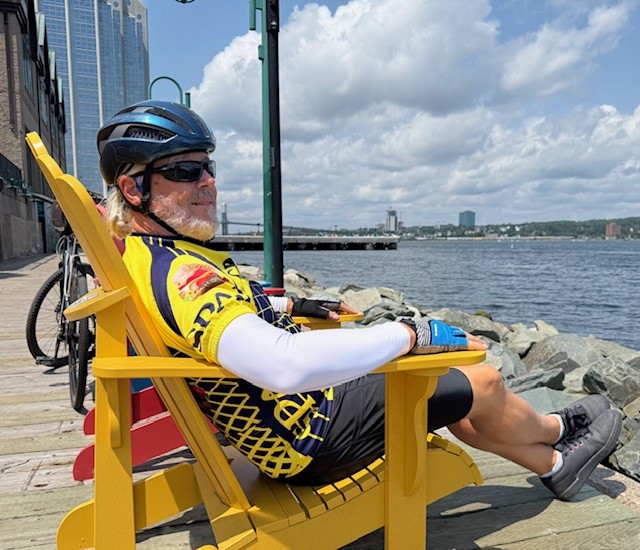
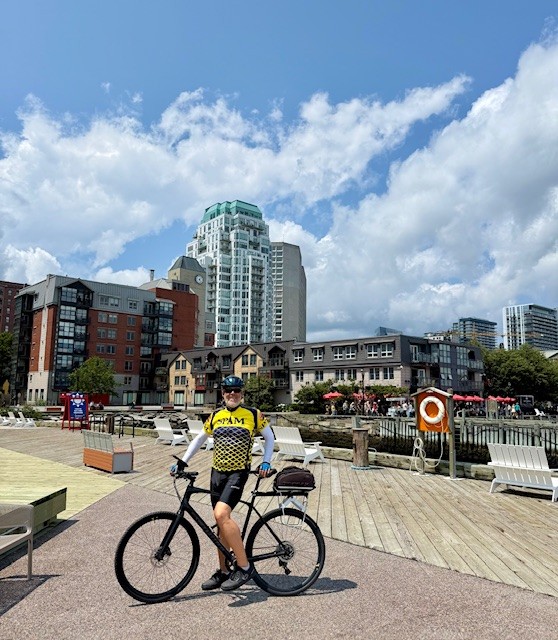
By morning I felt fine, and we got ready for our bike ride through downtown Halifax. Riding a bike is truly one of the best ways to see a city as you get to cover a lot of ground, not get tied up in traffic, and get to experience city landmarks up close.
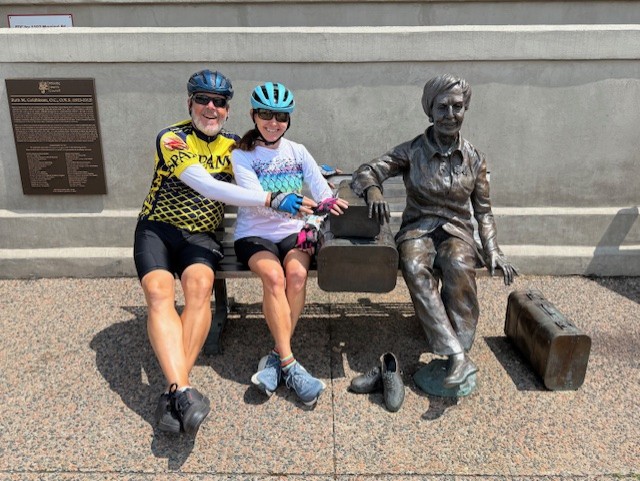
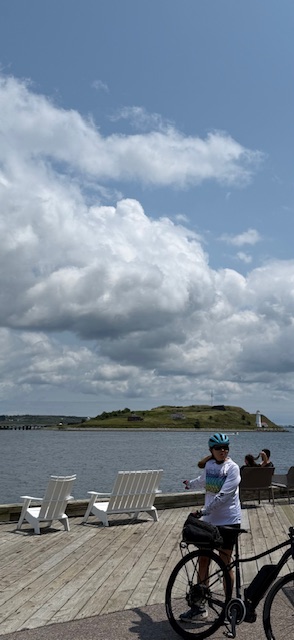
The Boardwalk in downtown is the “city center” as it is lined with shops, restaurants, and offers lots of different activities on the water. We had perfect weather… the views were beautiful!
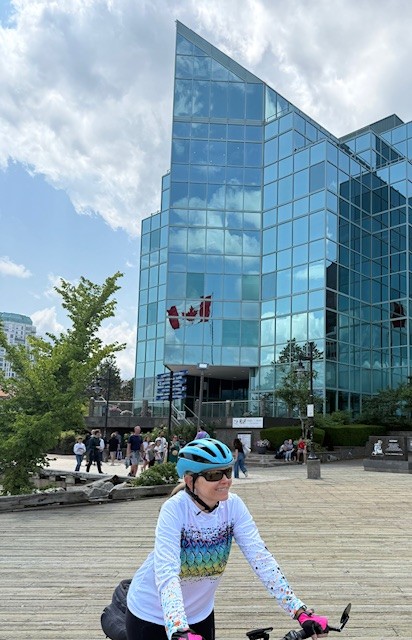
After the boardwalk, we rode through city streets and stopped in the shade of some trees in front of a historic-looking building
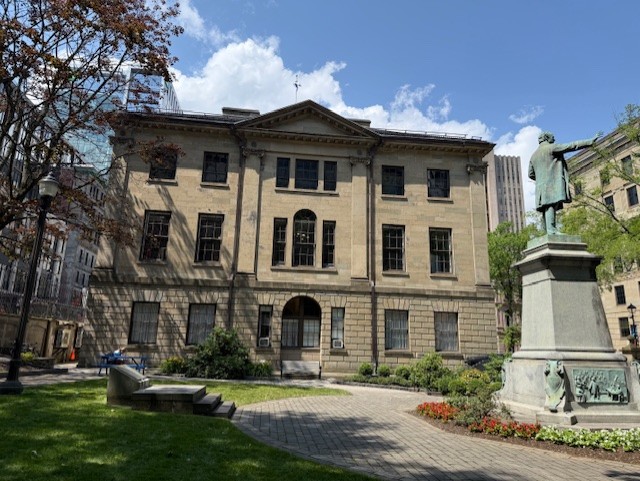
A nice gentleman noticed us relaxing in the shade and came over to chat. He worked in the Province House and invited us to take a tour of the building.
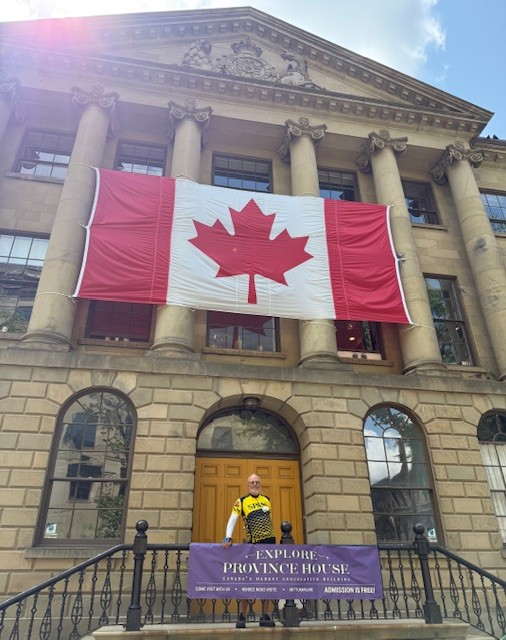
Since we had taken so many tours of the U.S. White House and Congressional buildings over the years, we were interested in touring another nation’s legislative buildings.
Province House is Canada’s oldest seat of government. The Nova Scotia House of Assembly has met in the building every year since 1819.
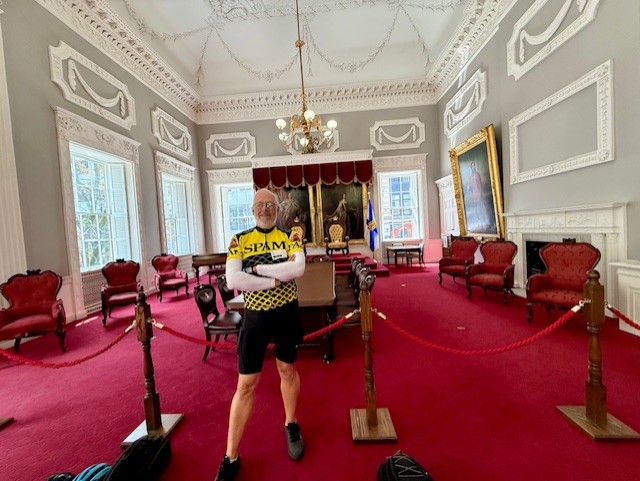
One of our first stops in the House was the historic Red Chamber.
Nova Scotia’s Legislative Council, the “upper house” of the legislature, used to hold deliberations in the Red Chamber. The Council held both executive and judicial roles during the young Province’s history. After Nova Scotia established a Supreme Court in 1754, in true government fashion, the Council (whose members were tenured and paid for life) didn’t get smaller or cheaper, it grew by replacing its judicial role with legislative functions.
However, after 150+ years of fierce debate (in the Red Chamber, I assume), the Council, through some fancy political maneuvers, voted to abolish itself in 1928. And that’s how the Red Chamber went from hosting legislative deliberations to hosting ceremonial events and royal visits, to include the visit by the Honorable Jay Hillmer.
Our last stop in the Province House was the Legislative Library.

After touring the Province House, we headed back to the campground and packed up to begin our 2-day journey northwest to Quebec. The next morning, we hit the road and noticed a difference in our usually laid-back feline…
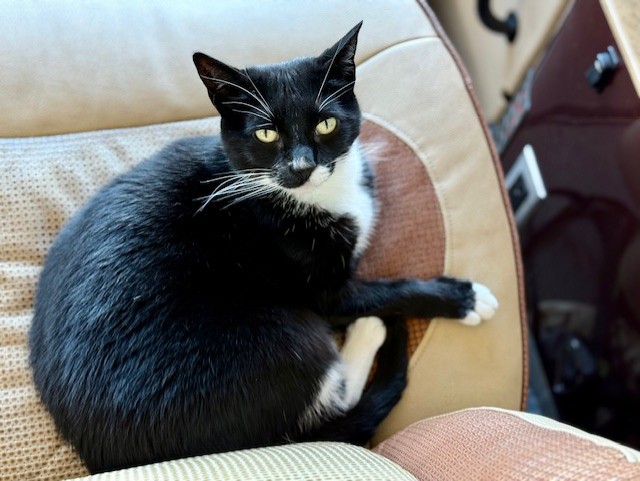
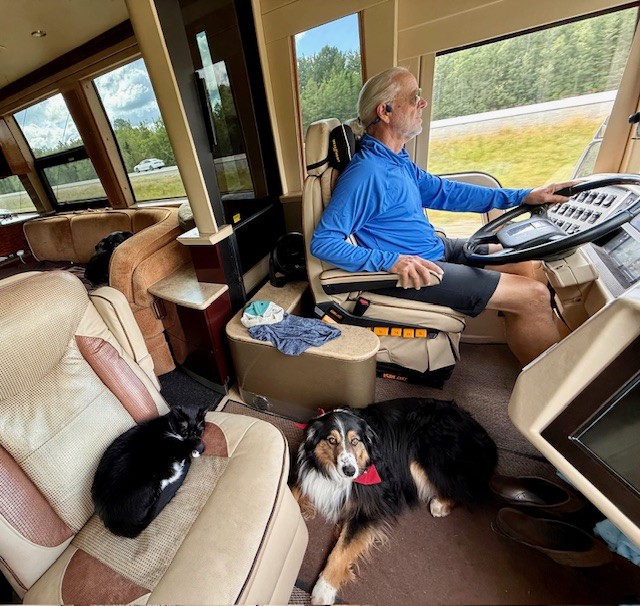
We made it to Moncton, New Brunswick, where Jay stretched his legs while I took a gym break at one of the few Planet Fitness locations in Atlantic Canada.


By this time, both dogs were extremely concerned. They didn’t know what tricks Frankie would pull next. Frankie quietly stared at them both with a cool calmness that filled the canines with cascading dread.
Under Frankie’s gaze, the dogs nervously paced the narrow path through Tinkerbell’s interior. Soon, we found a welcoming Walmart on the west side of New Brunswick in a small town called Woodstock. Frankie approved the stop, and we settled in for the evening.
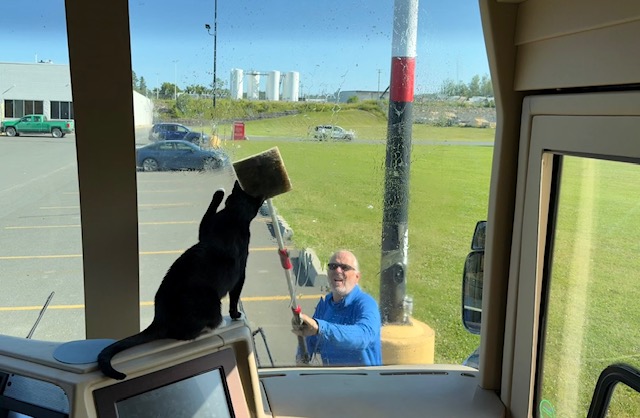
Austin begged me to take him outside for relief from Frankie’s authoritarian moves.

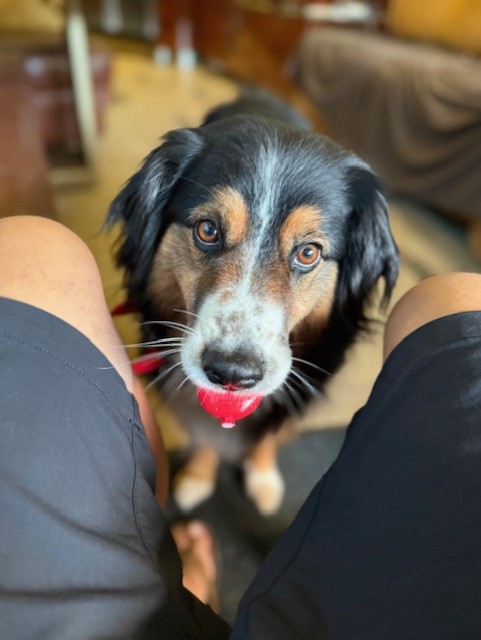
After a quick trip inside Walmart, Jay and I returned to the bus, which Frankie had diabolically transformed into Tink’s Tomb of Torture.
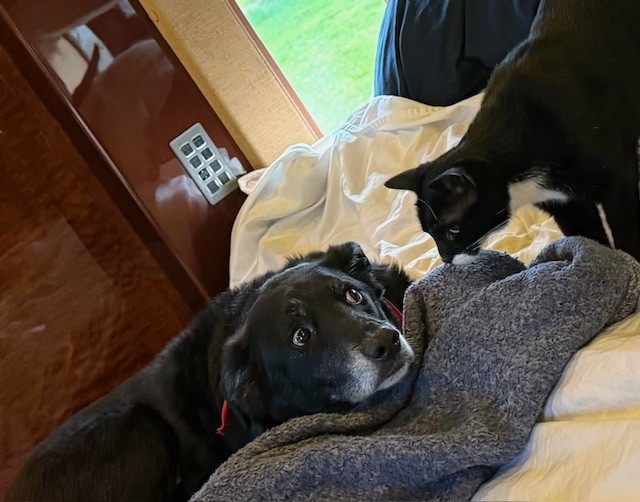
Somehow, we all managed to sleep and by morning, Frankie was back to his docile self. The dogs breathed a sigh of relief as we drove out of the Walmart in Woodstock and headed on to Quebec for our next Canadian adventure!
Have thoughts about my post? Please share a comment! 🙂
 Tinkerbell's Travels
Leave a comment